
The History of Mu Chapter
The roots of Mu Chapter extend back more than two decades before its installation as a chapter of Sigma Pi. In 1897, Cornell students from St. Lawrence and Jefferson Counties in northern New York organized the St. Lawrence and Jefferson Club, commonly known as the S. and J. Club. The organization was initially a small sectional club, typically numbering fewer than ten members, created to provide friendship and community for students from that region of New York.
Although few formal records from the club’s earliest years survive, its members included accomplished Cornell students and alumni. Among them were championship athletes, class leaders, and Harry Porter ’07, who won the gold medal in the high jump at the 1908 Olympic Games. This early tradition of achievement in scholarship, athletics, leadership, and campus involvement would become a defining characteristic of the organization that followed.
The Founding of Omega Delta
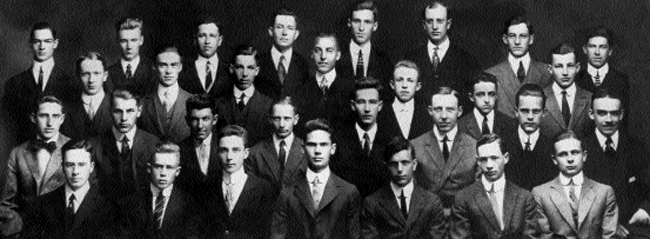
By the spring of 1913, the S. and J. Club had grown strong enough that its members decided to establish a fraternity. Fifteen Cornell undergraduates formed the Alpha Chapter of Omega Delta, creating a brotherhood with ambitions that extended beyond the original geographic club.
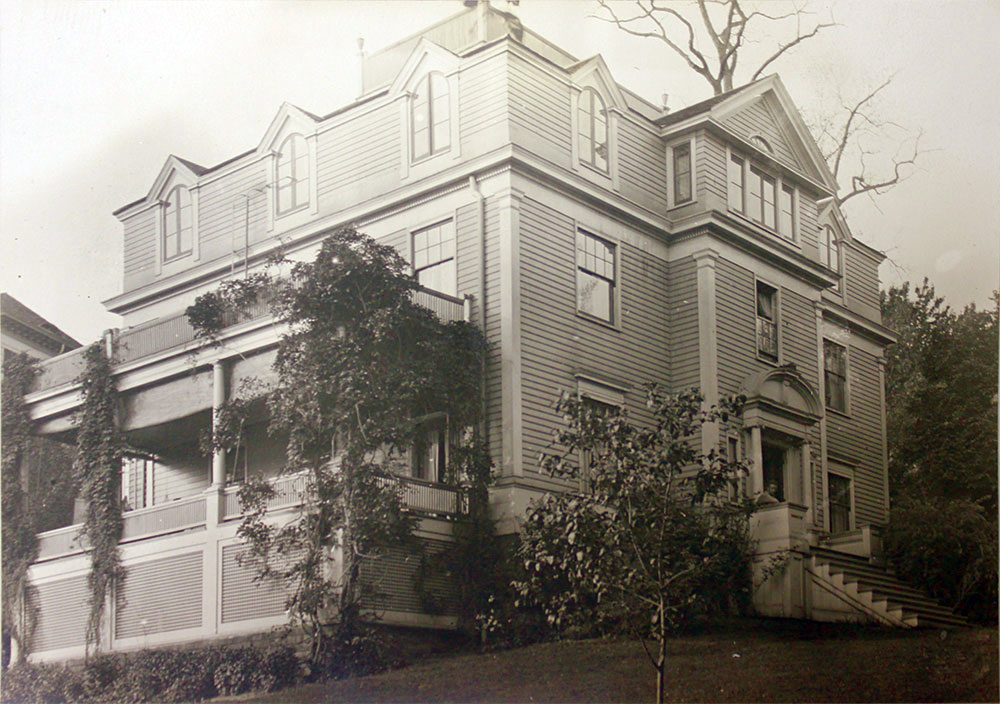
The new fraternity leased a house at 636 Stewart Avenue, just a few blocks from campus. The building still stands today. Omega Delta grew rapidly, expanding from its 15 founders to 33 members by June 1914.
From its earliest days, Omega Delta established a strong presence at Cornell. Its members excelled academically and participated extensively in university life. Members competed on Cornell athletic teams, including the championship lacrosse team and track squad, and three members of the fraternity were simultaneously members of the Cornell Glee Club—an accomplishment in which the young fraternity took particular pride.
As its membership and reputation grew, Omega Delta was accepted into the Interfraternity Rushing Association and incorporated under the laws of the State of New York. The fraternity was no longer simply a small group of students living together. It was becoming an established part of the Cornell fraternity community.
A Permanent Home at 730 University Avenue
In 1915, Omega Delta received an opportunity that would shape the next century of its history. A Cornell professor who was moving to Minnesota offered to sell his home and property near the edge of campus.
The purchase price was $20,000—a significant sum at the time. The members secured the property with $2,000 in cash and the remainder through two mortgages. The house was initially too small for the fraternity’s needs, so a third story was added, allowing the building to accommodate approximately 28 men. The brothers also undertook extensive repairs and purchased new furnishings, financing some $8,000 in improvements through the issuance of bonds.
By Easter 1915, the work was complete, and Omega Delta moved into its new home at 730 University Avenue.
The decision to purchase the property was an ambitious one for such a young organization, but it established something that generations of Mu Chapter brothers would come to understand deeply: 730 University Avenue was more than a fraternity house. It was home.
Becoming the Mu Chapter of Sigma Pi
With a permanent home, growing membership, and an increasingly strong position within the Cornell community, Omega Delta began looking toward a larger future. The fraternity petitioned Sigma Pi Fraternity of the United States for membership in the national organization.
The petition was granted and on May 18, 1917, Omega Delta became the Mu Chapter of Sigma Pi Fraternity.
The transition connected the local brotherhood created at Cornell with a growing national fraternity while preserving the friendships, traditions, and sense of community that had begun with the S. and J. Club two decades earlier.
Building for Future Generations
As Mu Chapter continued to grow, its home evolved with it. In 1942, a new wing was added to meet the needs of the expanding brotherhood. In 1958, additional improvements brought a new kitchen, dining room, and front porch to the chapter house.
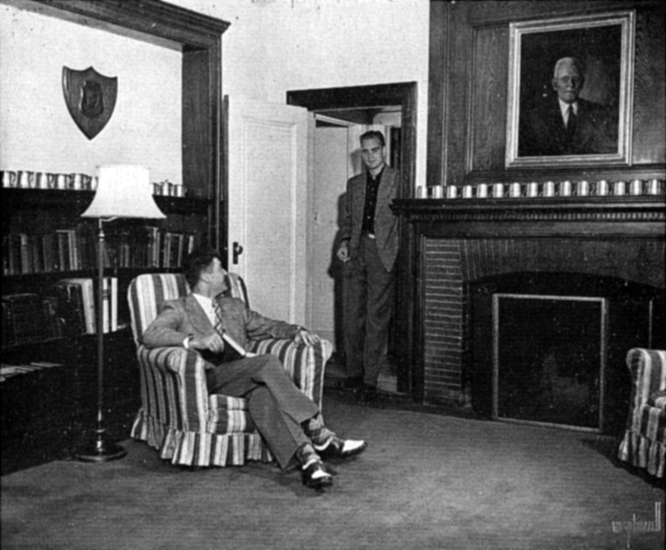
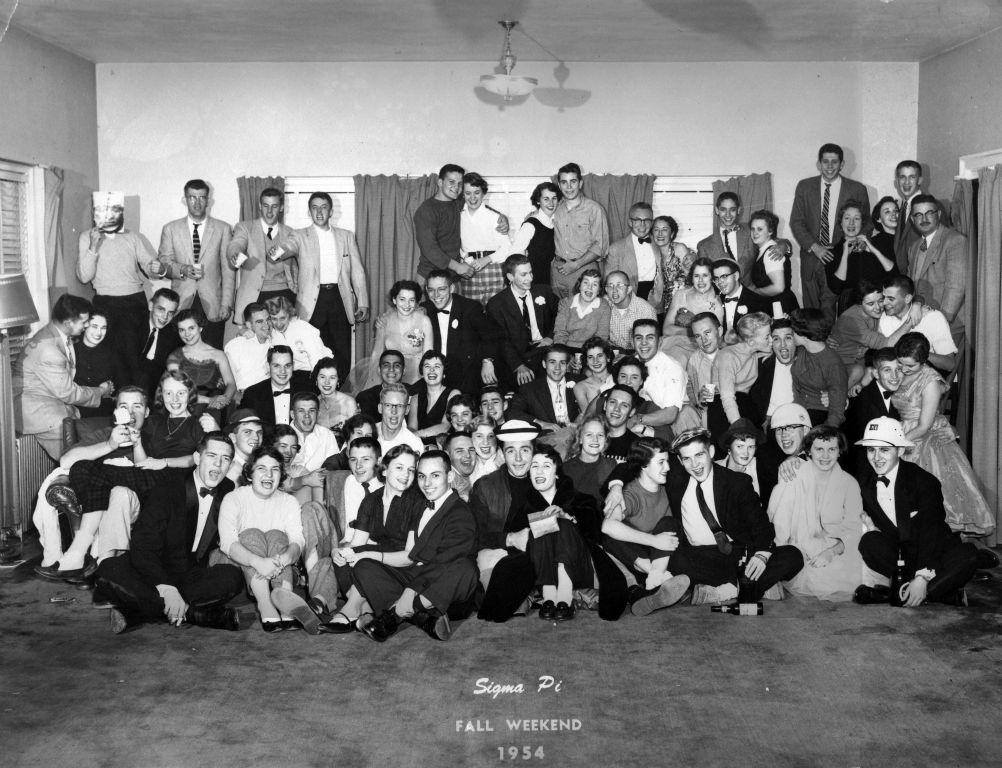
For generations of brothers, 730 University Avenue became one of the constants of the Mu Chapter experience. While the members changed from year to year and the world around Cornell evolved, the house remained a gathering place where friendships were formed, traditions were passed down, and generations of Sigma Pi brothers found a home away from home.
The 1994 Fire and the Rebirth of 730 University Avenue
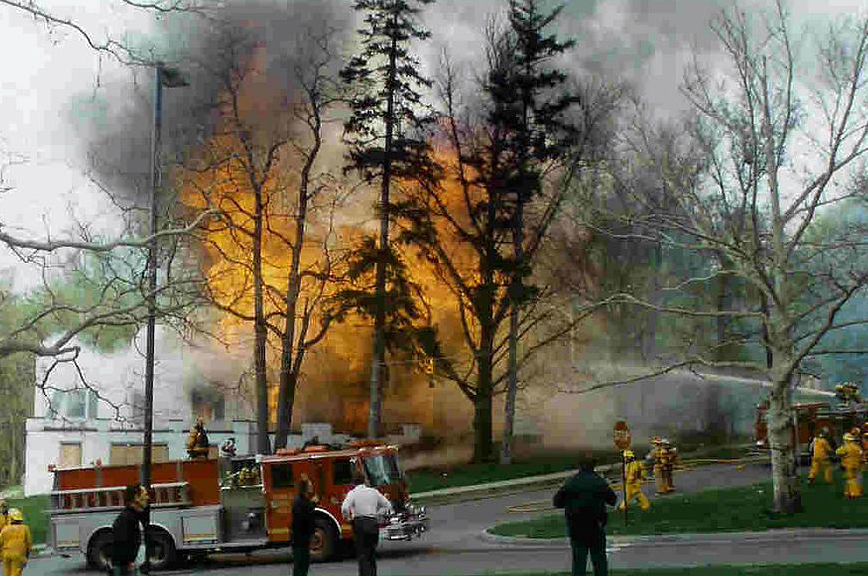
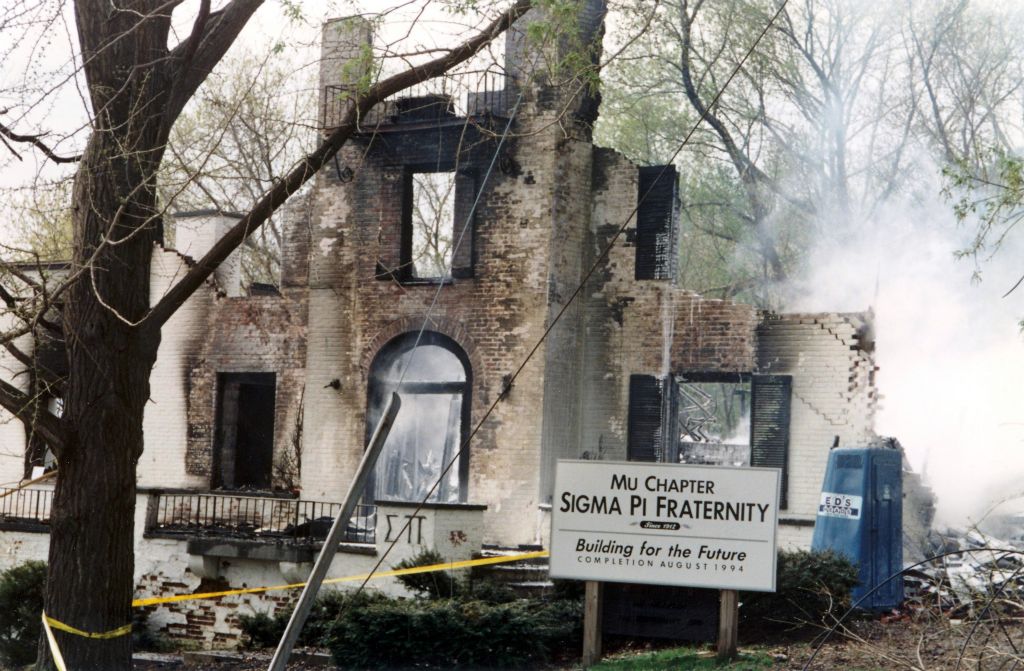
In 1994, Mu Chapter faced one of the greatest challenges in its history.
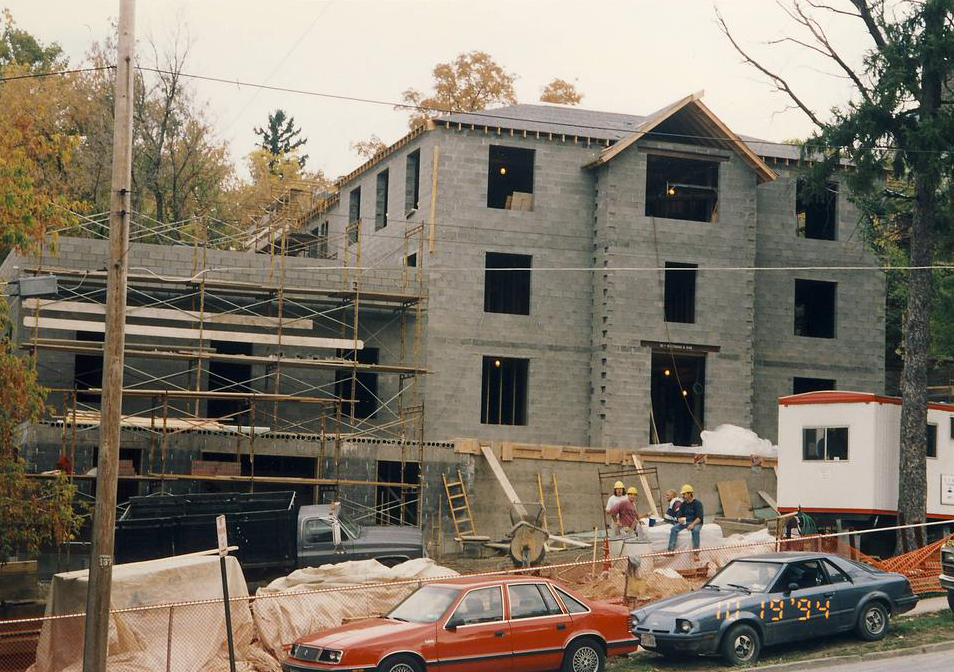
A comprehensive remodeling project was underway when a worker’s error resulted in a devastating fire that destroyed much of the chapter house. Yet even before the blaze had been fully extinguished, the fraternity was already looking toward the future. The chapter’s architect was instructed to begin developing plans for an entirely new house that would incorporate the portions of the historic structure that could be preserved.
The rebuilding effort became another chapter in a long tradition of Mu Chapter alumni and undergraduates responding to adversity with determination.
The new and improved chapter house opened in 1999, preserving the chapter’s historic home while creating a facility designed to serve new generations of brothers.
Building a Model for the 21st Century
The reopening of the chapter house in 1999 marked the beginning of a new era for Mu Chapter—one focused on creating not only an exceptional fraternity experience, but also one of Cornell’s premier living-learning communities.
Investing in Professional Success
In 2004, Mu Chapter launched what would become one of its signature alumni programs—the New York City Career Event. By connecting undergraduate brothers with accomplished alumni across a wide range of professions, the annual event has helped generations of members explore career paths, build professional networks, and secure internships and employment. Today, it remains one of Sigma Pi’s premier career networking traditions.
Strengthening the Residential Experience
In 2009, Mu Chapter became the first fraternity at Cornell to implement a Resident Advisor (RA) program, strengthening leadership, mentorship, and accountability within the chapter.
That same year, the chapter also became the first Cornell fraternity to require incoming freshmen to sign a two-year housing commitment, providing greater stability while helping new members become fully immersed in chapter life. Incentives encouraging upperclassmen to remain in the house fostered daily mentorship and stronger relationships between younger and older brothers.
Expanding the Educational Mission
The Sigma Pi Mu Chapter Educational Foundation, established in 2007 as a 501(c)(3) nonprofit, was created to support educational programming, improve the learning environment within the house, and provide mentoring opportunities for Mu Chapter brothers.
Building on that mission, the chapter launched a successful Centennial Fundraising Campaign in 2013, reducing house debt and strengthening the chapter’s financial future.
In 2015, Richard “Dick” Cahoon ’77 funded major upgrades to the West Lounge, Memorial Library, and the house’s wireless infrastructure, creating modern study spaces and significantly enhancing the academic experience within the house.
These improvements culminated in the Dining and Learning for the 21st Century Initiative in 2018, highlighted by the creation of the Learning Commons—a collaborative study space that transformed the chapter house into a true living-learning community.
A Tradition of Innovation
These initiatives reflected a simple philosophy: a fraternity house should be more than a place to live.
Through visionary alumni leadership and committed undergraduate participation, 730 University Avenue evolved into a place where scholarship, mentorship, leadership, and professional development are woven into everyday chapter life. That commitment to innovation positioned Mu Chapter to meet the next great challenge in its history—protecting the house for future generations.
Protecting the House for the Next Generation
In the fall of 2024, Mu Chapter once again faced a defining moment in the history of 730 University Avenue.
The discovery of mold forced the undergraduate brothers to evacuate the chapter house on September 18, 2024. What initially appeared to be a serious facilities problem quickly became a challenge to the future of the house itself. The work required to remediate the mold, repair the building, and restore the property would be extensive—and expensive.
For more than a century, however, Mu Chapter had faced moments when the future of its home depended upon the willingness of its brothers to act.
The response was extraordinary.
Mu Chapter alumni from across generations rallied around the house. More than 540 donors contributed to the recovery effort, with many brothers making multiple gifts. Together, they raised more than $1.3 million to remediate, repair, restore, and preserve the chapter home.
The campaign was about far more than replacing damaged materials or repairing a building. It was about protecting a place that had shaped generations of lives.
The restored house represented more than recovery from a crisis. It became a visible reminder of the strength of the Mu Chapter brotherhood across generations.
A brother who graduated decades ago may never meet every undergraduate who benefits from his gift. A donor may never sleep in the room he helped restore, sit on the porch he helped preserve, or share a meal with the brothers who will call 730 University Avenue home years from now.
That is the nature of legacy.
Each generation inherits something built, protected, and passed forward by the generations before it. The founders of Omega Delta could not have known the names of the thousands of brothers who would eventually walk through the doors of the home they purchased in 1915. The brothers and alumni who rebuilt after the 1994 fire could not have known who would live there decades later.
They simply understood that the house was worth preserving.
The alumni who rallied in 2024 and 2025 made the same choice.
Today, 730 University Avenue stands because generations of Mu Chapter brothers have repeatedly decided that their responsibility to the fraternity does not end when they graduate. They have understood that brotherhood is not only about what we receive from those who came before us.
It is also about what we leave for those who come after us.
Centennial Celebration
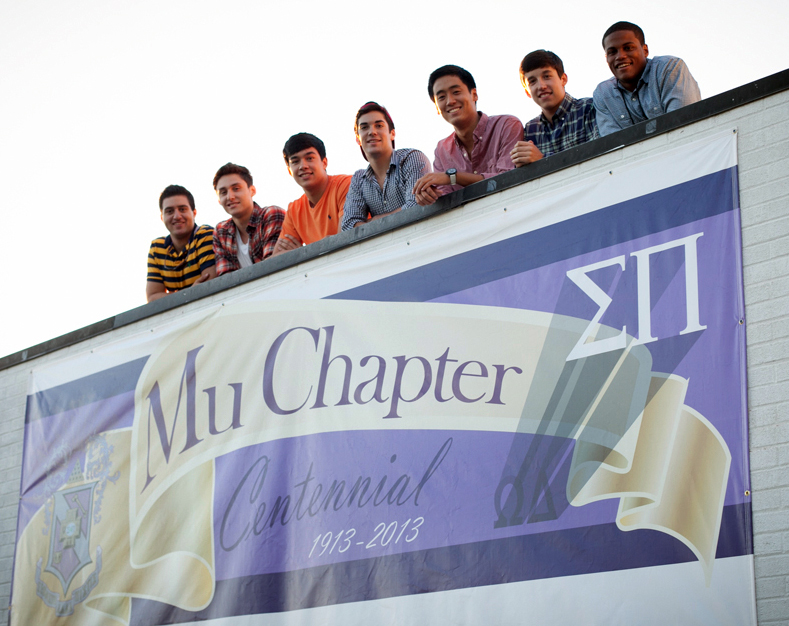
To commemorate the 100th anniversary of the fraternity, over 250 alumni and undergraduates gathered for the Centennial Celebration, a weekend of festivities in the fall of 2013. We look forward to the next 100 years of Sigma Pi Fraternity at Cornell!
Those Who Attended
Richard “Dick” Pew ’55
James Keene ’57
Robinson VanNess ’57
Ken Steadman ’59
James Palmer ’60
Wesley Grace ’62
Jim Gaskell ’66
Wally Knox ’71
Fred Peterson ’71
Greg Fisher ’72
Jim Boland ’73
Martin Burns ’73
Howard Rosen ’73
William Strasz ’73
Steve Booth ’74
Ted Chen ’74
Ralph Cinquegrana ’74
Robert Ferry ’74
Caseu Forbes ’74
Don Fullerton ’74
Edward Haas ’74
Bert Hurlbut ’74
Sandy Kraker ’74
Roger Perry ’74
James Chamberlain ’75
Jeff Craver ’75
David Dellenbaugh ’75
Bill Dougherty ’75
Ed Gogol ’75
Vance Harrison Jr. ’75
Mark Hausknecht ’75
Stephen Lozier ’75
John Morrison ’75
Fred Parker ’75
Michael Quaid ’75
John Stetson ’75
Gary Wicks ’75
William Forman ’76
Michael Anderson ’77
Dick Cahon ’77
Charley Clark ’77
John Christoforo ’77
Henry Dunnenberger ’77
Jim and Emy Franz ’77
Glenn Mazzamaro ’77
James Myers ’77
Matthew Petti ’77
Steve Ryan ’77
Dave Williamson ’77
Peter Wright ’77
Mark Barmasse ’78
Bill Cavanaugh ’78
John Haggerty ’78
Todd Hasselbeck ’78
Sandy (Meeks) True ’78
Steven Mongeau ’78
Lawrence Paglierani ’78
Michael Reiner ’78
Kent Sheng ’78
Jack Welch ’78
Larry Barstow ’79
Steve Bergh ’79
Wayne Buder ’79
Dave D’Orlando ’79
Andy Kantor ’79
Kevin Kruse ’79
Larry MacLennan ’79
Keith Molof ’79
Rob Novo ’79
Gordon Pugh ’79
Curt Quantz ’79
Steve Rosensweig ’79
Leo Timms ’79
Rick Bosshardt ’80
Luc Chabot ’80
Thomas Cherner ’80
Joe Dervay ’80
Jonathan Fordin ’80
Wayne Forman ’80
Steven Hobbs ’80
Owen McCarron ’80
Tony McManus ’80
Don Motschwiller ’80
Randy Ottinger ’80
Stephen Pirozzi ’80
Kurt Rasmussen ’80
Jay Sacco ’80
Jarett Wait ’80
Doug Uyeno ’80
John Altmeyer ’81
Edward Berlin ’81
Brad Crooke ’81
Gary Derck ’81
Brian Finneran ’81
Howie Gordon ’81
John Pettee ’81
Mike Rantz ’81
John Roche ’81
Joe Ruocco ’81
Tom Silver ’81
Nick Vojnovic ’81
Ford Fay ’82
Jim Garr ’82
Tim Hawes ’82
Gerry Leape ’82
John Mennell ’ 82
Rick Rego ’82
John Roche ’82
Kurt Bosshardt ’83
Dennis McNamara ’83
Steven Novak ’83
Tom Owens ’83
John Stewart ’83
Michael Vernick ’83
Greg Vojnovic ’85
Peter Sedivy ’98
James Hulvat ’99
Jason Scimeme ’00
Jonathan Coll ’01
Michaeol David ’01
Arnoldas Giedrimas ’01
Craig Huemmer ’01
Nick Kruczynski ’01
Edward Perez-Cortes ’01
Brian Yasutis ’01
Aaron Klein ’12
Harim Choi ’13
Jonathan Morello ’13
Zach Smith ’13
Anthony Alvarez ’14
James Alvarez ’14
David Baker ’14
Jeff Baker ’14
Jonathan Beckerman ’14
Andrew Luzzi ’14
Brendon Vina ’14
Alvaro Galan ’15
Bennet Heidenreich ’15
Jonathan Hernandez ’14
Mateo Hernandez-Ysasi ’14
Ben Dreier ’15
Alvaro Galan ’15
Adam Gottlieb ’15
Bennet Heidenreich ’15
Jacob Laufer ’15
Ian Leggett ’15
Chris Liendo ’15
Shayan McGee ’15
Maximiliano Olivares ’15
Jordan Thompson ’15
Nathan Winans ’15
Nicholas Wint ’15
Alec Charbonneau ’16
Andrew Wald ’16
Nicholas Ornitz ’16
Robby Attia ’16
Zach Gilbert ’16
Michael Adelstein
William Alford
Turk Anwar
Roscoe Balter
Brandon Choi
Greg Dgheim
Bryson Graves
Rohun Gupta
Benny Johnson
Andrew Joseph
Joseph Manzi
Connor Riser
Felix Tabary
Chris Zollner